
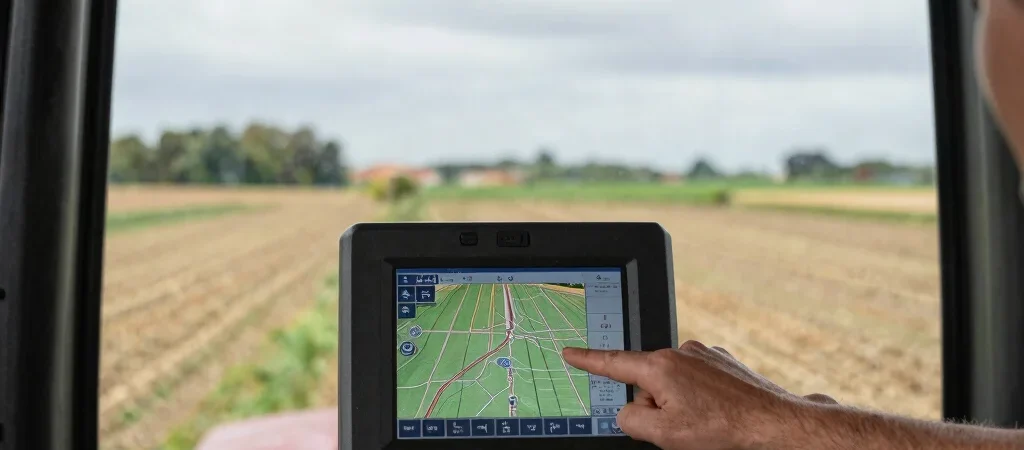
A screen in the cab can show a field boundary, a machine can record an operation, and a separate system can hold crop notes. If those records cannot be found or compared later, more data has not necessarily produced better decisions. For a farm, useful technology starts with information that can travel from one job to the next.
Follow one decision
Take a familiar question, such as where crop performance varied across a field. The answer may involve a map, the date and conditions of an operation, and notes on what was observed afterward. Keeping those pieces connected makes it easier to revisit a choice without relying entirely on memory.
Check access before adoption
Before adding a tool, ask how information gets into it, whether it can be exported in a usable format, and what happens if a subscription ends or equipment changes. These are practical questions, not technical fuss: a record the farmer cannot retrieve has limited value for planning or discussion. Terms of access and data handling differ between services, so read the provider’s current documentation.
Keep people in the loop
A digital record can support observation, but it does not explain every difference between two parts of a field. Soil, weather, timing, and operator experience still matter, and someone has to judge what the information means in context. Advice: trial a new tool on one clear task, keep a record of what it helps you decide, and expand only if it earns a place in the farm’s routine.